


| By Dr. Michael Bindon, ISTA Executive Director |
Generative AI can now script scenes, compose music, generate design concepts, and offer creative suggestions in seconds. Earlier this year, I argued that “caught using AI” is the wrong question for arts education entirely. What matters is whether students use these tools appropriately, ethically, and transparently in service of their own learning.
I still believe that. But sitting alongside that question is another one: if all those tools disappeared tomorrow, could our students still create?
For most of my career in arts education, I have been drawn to the opposite instinct: take things away rather than add them. Long before AI tools or sophisticated production technology reached school studios, I noticed the same pattern again and again, particularly in theatre. Put students in an empty space, remove the props, the effects, and the technology, and ask them to build meaning with only their bodies, voices, and shared imagination, and something shifts. Attention sharpens. Collaboration deepens. Choices become fewer and stronger.
As a young theatre teacher in the 2000s, and later through postgraduate research, I discovered that this instinct sat within a much larger theatrical tradition: the comic minimalism of John Godber, the actor-centred physicality of Steven Berkoff and DV8, and the deliberate openness left by playwrights such as Sarah Kane and Martin Crimp, whose texts invite ensembles to complete meaning through transformation rather than scenery. At ISTA, we call this Theatre of Limits. It does exactly what it says.
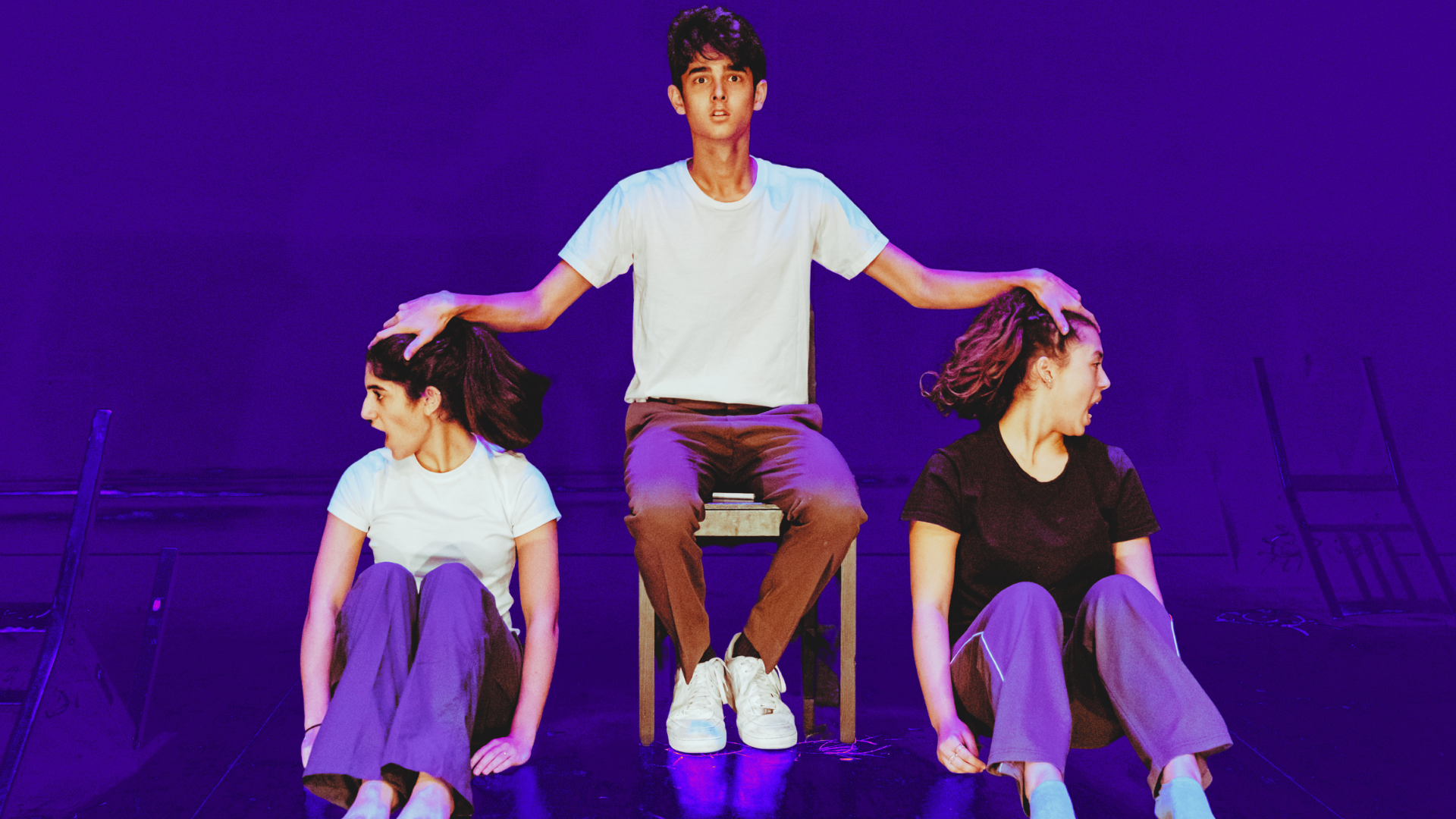
Constraint does not diminish creativity. It clarifies it.
Today’s classrooms face a new version of an old pressure that has always pulled theatre toward abundance, except the abundance is now generative rather than merely technical. AI can script, compose, and visualise faster than any student. Used well, that is a real asset. It can support ideation, widen access, and offer perspectives that a single classroom never could. Used carelessly, however, it risks becoming substitution rather than enrichment.
If a student outsources interpretation, structure, or artistic decision-making entirely, the learning does not disappear. It simply moves somewhere we can no longer see it.
Theatre of Limits offers a practical response. Not a rejection of technology, but a discipline that sits beneath it. The principle is simple: when the frame is reduced, students must interrogate intention and justify their own decisions because there is nothing else to hide behind. When elaborate options are available from the outset, it becomes easier to default to surface enhancement rather than meaning.
The discipline of limitation changes what each element in the drama studio is asked to do. The actor becomes the primary resource. The ensemble becomes the scenography. The empty space becomes the catalyst for imagination.
What this looks like in practice
A philosophy only becomes useful when it can be translated into action. Teachers need approaches that work on a Tuesday morning with the students, space, and resources they already have available.
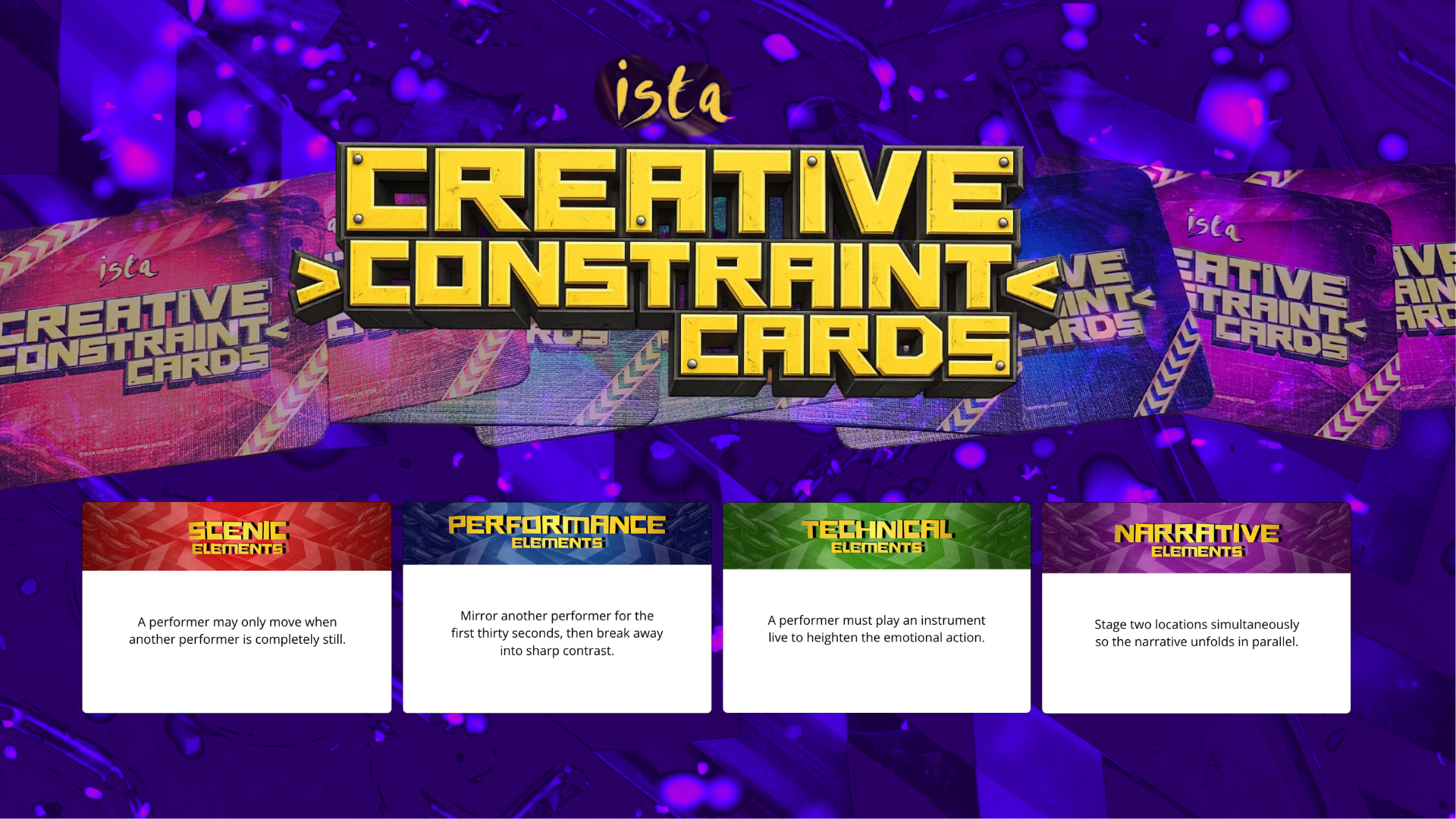
Over the past year, this thinking has led us to develop Creative Constraint Cards. The aim was not to create another resource pack. It was to make the discipline of limitation immediately usable for busy teachers. The set contains 205 original prompts, each introducing a single clear restriction that encourages groups to make bolder, more inventive choices through action, interaction, and theatrical decision-making rather than equipment.
Organised into four categories, Technical Elements, Scenic Elements, Performance Elements, and Narrative Elements, the cards are designed to work in any rehearsal room or classroom, with any group size, with or without resources. Each card introduces a single creative restriction that challenges students to rethink how meaning is created and communicated.
The cards are not the practice itself. They are simply a practical shortcut into it. More importantly, they reinforce a principle that extends far beyond theatre: creativity is not usually the result of unlimited options. More often, it emerges when people are required to work purposefully within a frame.
ISTA’s strategic commitment over the coming years is to support responsible AI integration in arts education while continuing to foreground human-centred practice. As generative tools become more capable, the distinctly human dimensions of art-making become more valuable, not less: focus, presence, interpretation, judgement, and collective authorship.
AI can assist. It cannot carry artistic responsibility.
If we want young artists who can think critically, collaborate deeply, and create with purpose, they need to be able to do so with or without sophisticated tools. That is not nostalgia, and it is not resistance to technology. It is the recognition that foundations come before augmentation.
In theatre, as in education, less is often where the real work begins.
The Creative Constraint Cards are available now through the ISTA Store: store.istaglobal.org/products/creative-constraint-cards

Dr Mike Bindon is ISTA’s Executive Director, a specialist in international arts education and an active filmmaker and artist. His career has focused on developing creative strategies that expand young people’s access to high-quality arts experiences.
Before joining ISTA, Mike spent a decade leading the global development of the International Baccalaureate’s Diploma Programme theatre, film and visual arts courses. He holds a Master’s degree in Performing Arts Education and a Doctorate in International Education. His doctoral research explored how IB World Schools can overcome the barriers that prevent students from choosing Diploma Programme arts courses.
At ISTA, Mike leads the organisation’s strategic development and champions the role of the arts in creating globally minded, collaborative and culturally literate young people.


