


| By Tristan Tull (UK) |
As any film graduate will tell you, the leap from second year to the final-year project stretches the tendons. Students will enter their concluding year having worked on a number of productions and will be finding their feet as film-makers. What happens with the ‘grad film’ sometimes comes as a shock as every facet of a student’s learning is put to the test.
Regent’s University is an independent, international university in central London. Our film and screenwriting degrees immerse students in the practicalities of film-making and practices of the industry so that they are as connected and as prepared for the realities of the film-making world as possible. The conclusion of our degrees requires students to create short narrative dramas of 10–15 minutes with accompanying screening plans. Each student must take on a core head of department (HOD) role: director, producer or cinematographer on one f ilm, and a specialist role: production design, first assistant director, assistant camera or sound on another, meaning they are working on a minimum of two grad films in the first term of the year.
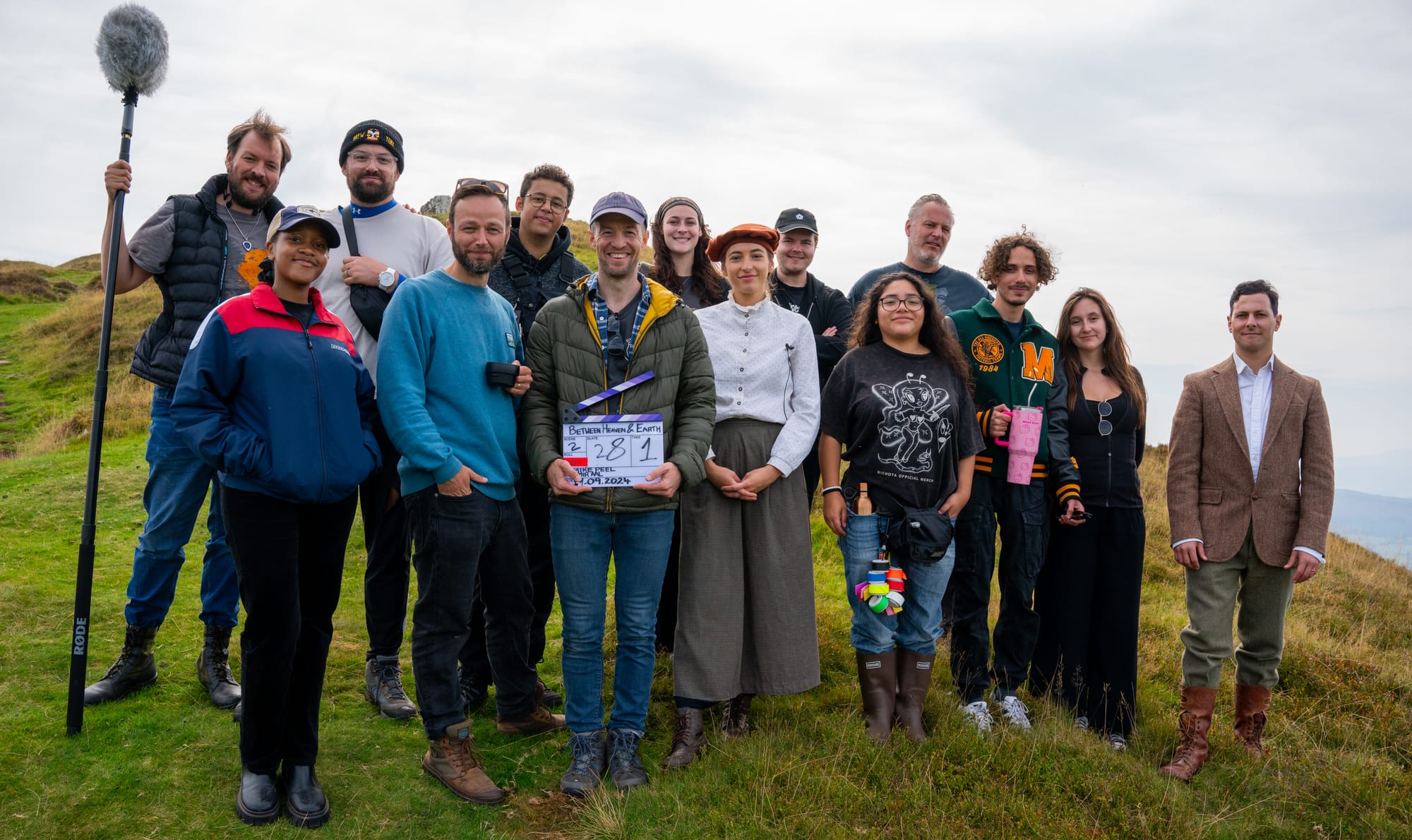
As the final term ended in 2024, my colleague, Director of Programmes, Mike Peel and I had a plan. It needed firm organisation, a budget, and a fast turnaround. Crucially it needed the commitment of our students to return to university earlier in September, adding more pressure to their workload. If, however, they bought into the plan it would give them invaluable experience in preparing for their final year. We began to discuss how we could shoot a film with the students at the end of the summer holidays with us taking on the HOD roles, whilst they gained production experience and learned from how we navigated the process. Mike had a script he had been developing based on the mountaineer George Mallory whose body was found (and lost) on Everest in 1999 after his attempt to scale it 75 years earlier.
Between Heaven and Earth is set in 1915 during the honeymoon of George and his new wife Ruth, as they go climbing in England’s Lake District. Mike was fascinated with George’s conflicted desires of family and adventure as well as Ruth’s realisations of what her life was about to become. I loved the script and asked if I could be the producer to Mike’s writer–director. Producing includes managing money, locations, cast, crew, and logistics, with each component dependent on the other. A good crew works in harmony but being unprepared can result in a project collapsing.
We realised we had some money in our annual budget that we could commit but without the students’ involvement it would be pointless. Luckily six (about half the cohort) immediately put themselves forward. Advertising on casting websites produced 160 applicants and 3 days of casting to find our 2 actors. These ended up being the very first pair we had seen on the first morning, Jess Frances and Paul McLaughlin. With our budget of £6,000 we worked out that we had three days in total.
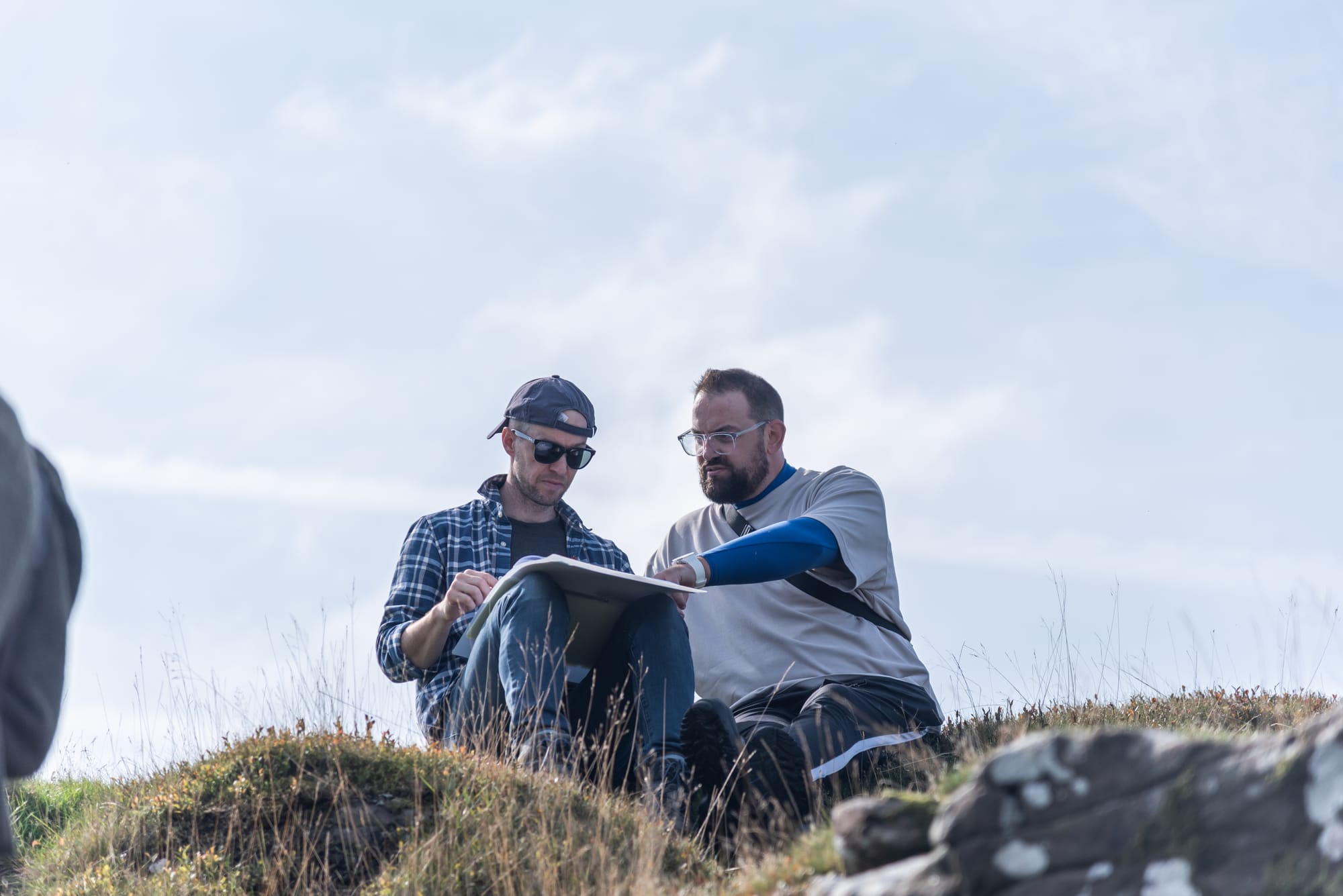
We originally hoped to film in the same location where the Mallorys’ honeymoon took place but soon realised that would involve two days’ travel so that was out. Being based in London we started to look for locations that could at least look mountainous — maybe we could shoot tight and ‘cheat’ it, maybe we move the story indoors? I knew though, that the Brecon Beacons were only a few hours’ drive away; if we found a sympathetic landowner we could maybe have our location. I chose a mountain by a lake called Llangorse, with an adventure centre at the foot of the mountain we could stay at. Miraculously we had three days of September sunshine in South Wales and other than the sound operator’s twisted ankle production went without hitch (something very rare in film-making).


