


| By Neha Choksy and Saket Raje |
Nautanki is a vibrant folk theatre tradition from North India, deeply rooted in rural entertainment. Combining storytelling, music, dance, and humour, Nautanki captivates audiences with tales of love, bravery, and social change. Its enduring appeal lies in its ability to reflect both cultural heritage and contemporary societal issues. More than performance, it mirrors society — a living art form balancing tradition and modernity.
Origins of Nautanki
Nautanki traces its origins to the 16th century, in regions now known as Uttar Pradesh, Rajasthan, and Haryana. It is believed to have developed from ‘Svang’ an earlier form that fused music, dance, and acting. The name Nautanki likely derives from a popular play, Shehzadi Nautanki, which left such an impression that it lent its title to this theatre tradition.
Performances were initially staged in village squares and community spaces, making them highly accessible. With minimal props and costumes, performances relied on the performers’ charisma and strong narrative. The harmonium, dholak, tabla, and nagara played a vital role in setting the tempo and enhancing the emotional tone of the performance. Over time, Nautanki expanded to incorporate real-life stories, mythologies, and public-service messages, becoming a community forum for collective education and reflection.
Themes and storytelling
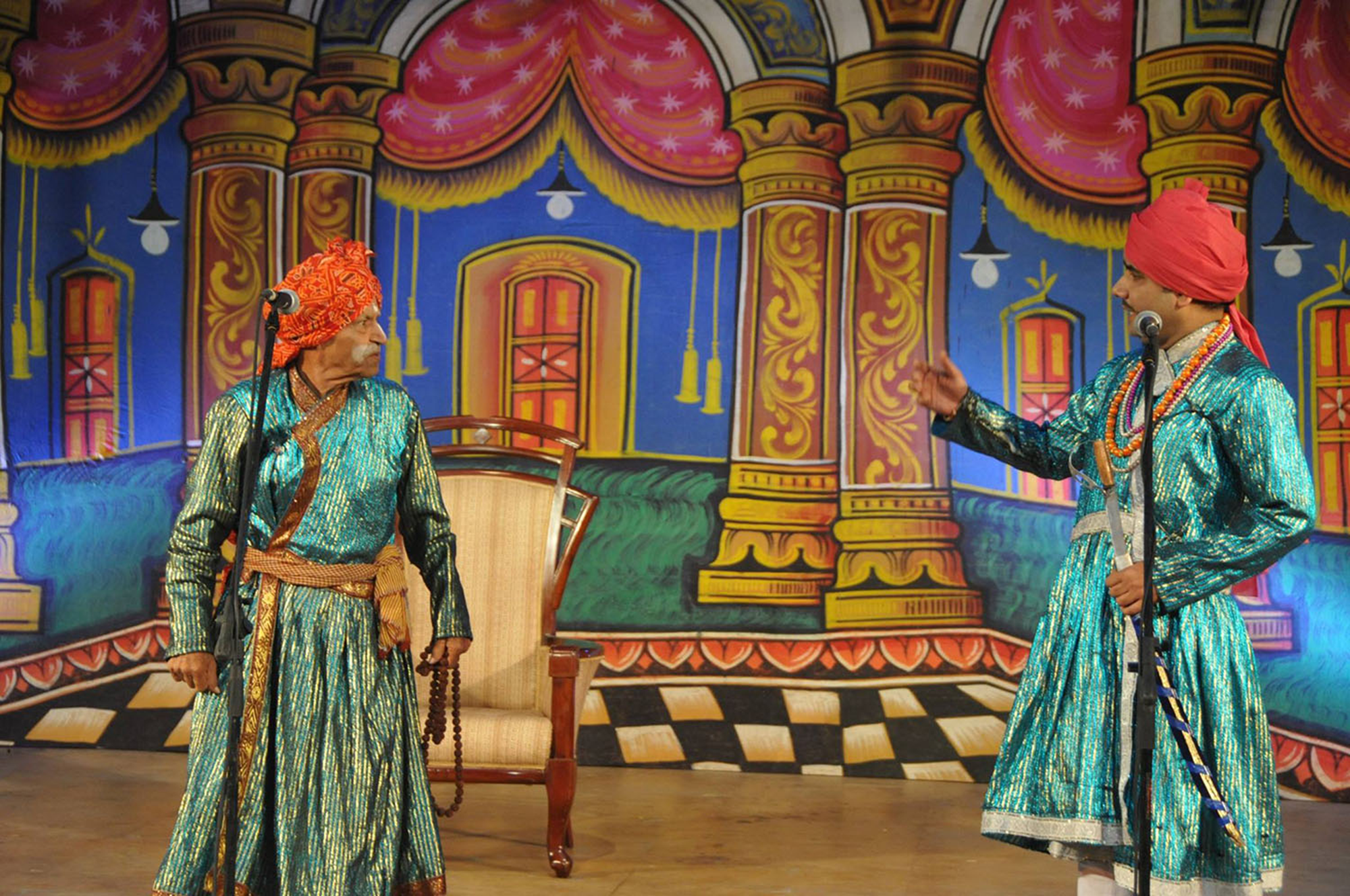
Storytelling forms the heart of Nautanki. Its thematic range spans mythological epics, historical sagas, romantic tales, and contemporary concerns. The Ramayana and Mahabharata are reinterpreted to reinforce moral values, family ties, and triumph of good over evil. Folk love stories like Laila-Majnu and Heer-Ranjha explore passion and fate, while stories of historical figures such as Rani Lakshmibai and Maharana Pratap instil cultural pride.
These narratives are designed to resonate emotionally with audiences, drawing them into the story's moral dilemmas and emotional journeys. Using hyperbole and melodrama, Nautanki invites audiences to feel and participate. In recent times, Nautanki has become a voice for modern societal issues — women's empowerment, caste discrimination, domestic violence, labour rights — proving its craft to provoke thought and inspire action, and serving as both artistic expression and civic dialogue.
Theatrical foundations
Nautanki draws from classical Indian performance principles, especially the Natya Shastra. Movement is expressive and symbolic — broad gestures, exaggerated walks, and choreographed action scenes are essential elements of angikabhinaya or expression through the body that conveys emotion as much as dialogue.
Performers rely on vachikabhinaya (vocal expression), often shifting between speech and song, and angikabhinaya, while also adapting their performance to the mood of the crowd. Spontaneity isn’t just encouraged — it’s essential. Performers must respond to the audience’s mood and reactions. This blend of structure and improvisation keeps Nautanki alive, shifting between script and spontaneity.
Production elements
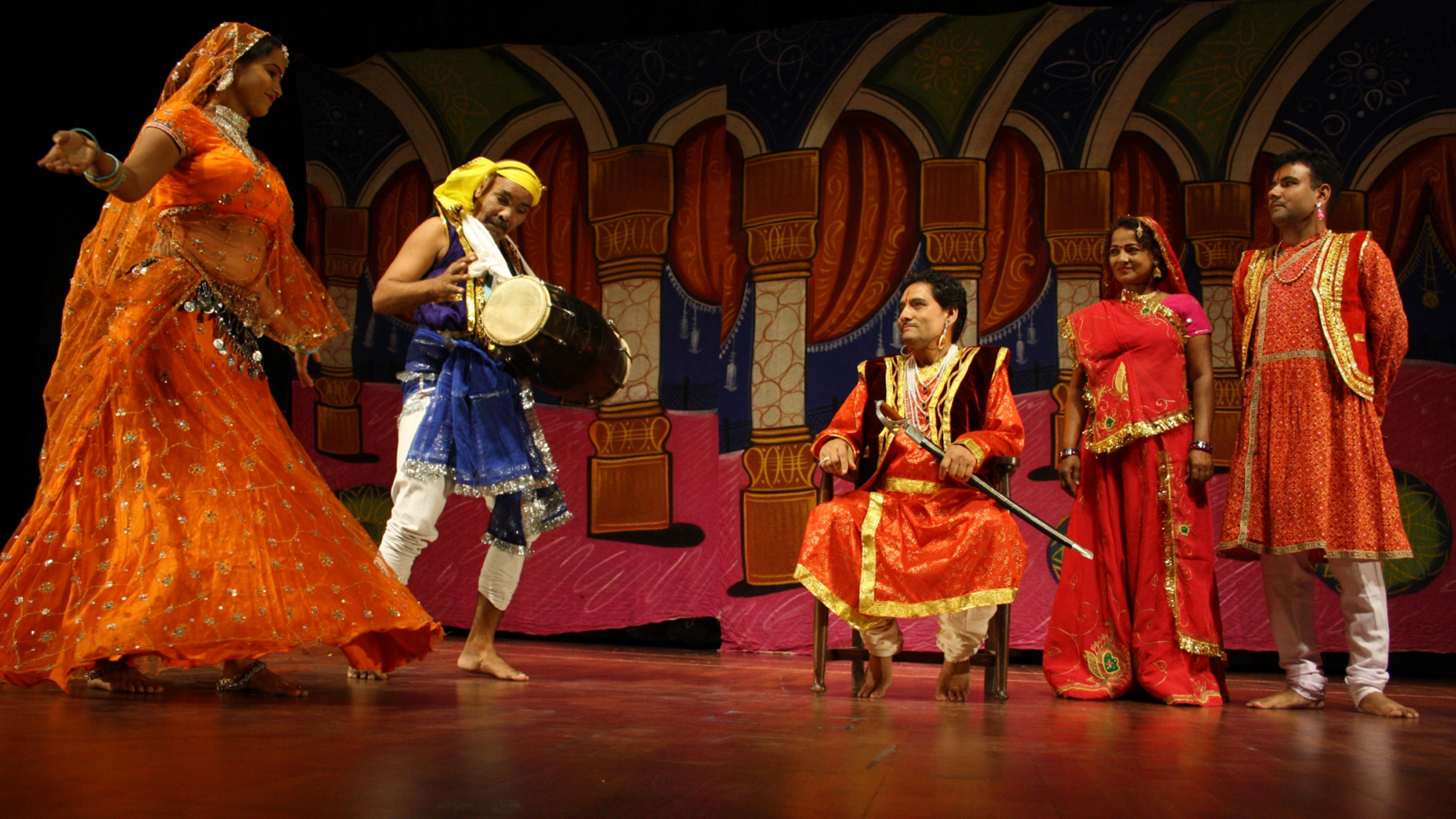
Costumes and make-up in Nautanki are both functional and symbolic. Characters are defined by their attire — heroes in regal kurtas and turbans, heroines in brightly coloured saris or lehengas, villains in flamboyant or dark costumes. Colour choices align with the emotions or rasas they represent — red for love, white for purity, and black for evil — helping audiences instantly recognise character types and moral alignments.
Make-up plays a vital role in amplifying expression, especially in open-air venues. Bold eyeliner, vibrant colours, and face paint help convey emotion and archetype from a distance. Traditional Nautanki was performed on portable wooden platforms with minimal staging. Even minimal staging becomes a canvas for imagination — audiences readily accept that a scarf is a river, or that a step forward is a journey through time.
Lighting and sound now enhance performances without compromising symbolic essence. This adaptability has allowed Nautanki to retain its authenticity while embracing modern tools for storytelling.
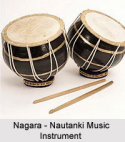
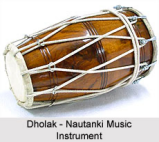
Music is the lifeblood of Nautanki. Instruments such as the harmonium, dholak, tabla, and nagara are still used to create rhythm and enhance emotional impact. The nagara, in particular, is often used to mark dramatic entrances and high points. Songs — whether in doha (couplets) or chhand (metered verse) — are more than interludes; they carry the story forward, adding poetry and depth to the narrative arc.

Emotional experience: Rasa and bhava
At the core of Nautanki is the evocation of rasa, the aesthetic experience or emotional flavour of the performance. Characters are designed to evoke specific bhavas (emotions), whether it is love, courage, humour or pathos. The hero (Nayak), heroine (Nayika), villain (Khalnayak), and clown (Vidushak) are constructed to represent emotional archetypes that contribute to the overall emotional journey.
Nautanki weaves together all four forms of abhinaya (expression) — angika (body), vachika (voice), aharya (appearance), sattvika (inner emotion) — to create a holistic theatrical experience. Sattvika abhinaya, in particular, allows actors to convey inner emotions through subtle facial changes and breath control. Nautanki succeeds by stirring deep emotion, often resulting in collective catharsis or reflection.
Character archetypes and actor techniques
Audiences come to Nautanki expecting certain familiar figures. The hero is righteous and brave; the heroine is resilient and emotive. The villain’s exaggerated gestures and menacing laugh signal trouble ahead, while the clown — often a master of satire — uses wit and slapstick to bridge the world of the play and the world of the audience. Other characters, like the sage or the courtesan, provide wisdom or intrigue and often serve as catalysts for the plot.
Actors train to master traditional expressions and movements, and to remain adaptable in live performance contexts. The ability to engage an audience directly, sometimes shifting the mood of the scene through spontaneous humour or emotion, is a key skill in Nautanki performance. Actors train through apprenticeships and community mentoring, developing their craft within the cultural context. This keeps Nautanki a living, evolving tradition.
Interview with theatre practitioner Atul Yadvanshi
Mr Atul Yadvanshi, founder and Artistic Director of Swarg Repertory, is a passionate advocate for Nautanki. His work spans performance, pedagogy, and innovation — reviving Nautanki on national platforms like Bharat Rang Mahotsav, while staying true to its grassroots spirit.
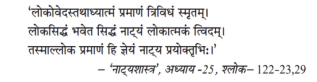
In conversation, Yadvanshi describes Nautanki as ‘a living, breathing celebration of culture’. Citing a shloka from the Natyashastra, he emphasises that true drama reflects lok — the world of everyday life. For him, Nautanki is not ‘just folk theatre’ — it is a modern, evolving theatrical form deeply grounded in lived experience, emerging as a vital and dynamic expression of Indian theatre: vibrant, relevant, and continually evolving with the times.
‘Nautanki blends story, music, and audience participation’ — a living, breathing celebration of culture. Unlike conventional proscenium theatre, where the audience watches passively, Nautanki invites viewers into the action. Making every performance a shared experience where stories, songs, and emotions circulate freely between stage and crowd.
According to Yadvanshi, Nautanki’s magic lies in its endless adaptability. Different gharanas bring distinct styles — hathras with classical ragas, kanpur with rhythm and humour. ‘Today’s performances often fuse these styles’, he notes, ‘catering to audiences who crave both tradition and contemporary energy’. This clever blending keeps the art form dynamic and relevant, allowing it to evolve while remaining firmly anchored to its roots.
Social commentary, he says, is intrinsic to Nautanki’s power. Productions like Phoolan Se Phool Tak reframe the story of the Bandit Queen, using music and satire to spark conversations about gender justice. ‘People began to think even as they laughed’, he reflects. In Nautanki, entertainment and activism dance together on the same stage.
Improvisation, Yadvanshi explains, is the heartbeat of Nautanki. While actors follow a fixed rekha or storyline, they freely weave in rang comic episodes, witty proverbs, and spontaneous lines. Performers are trained with a simple yet thrilling five-second rule — insert your improvisation, but return to the script within five seconds. Every show becomes a little different.
Language in Nautanki is another vibrant tool of expression. ‘If you want to make a joke, use Khadi Boli. If it’s a love song, use Braj Bhasha. If you need poetry, use Urdu’, Yadvanshi explains. Even without full understanding, rhythm and emotion bridge the gap. In this way, Nautanki defends linguistic diversity — scripts often include margin notes for dialect fidelity, and native speakers help preserve accuracy.
In some communities, audience participation is literally part of the structure. During rehearsals, senior audience members are handed red flags; if a scene drags, they raise a flag, prompting actors to inject energy or add a comic twist. This playful co-authorship keeps the performance grounded in its social context.
Visually, Nautanki is evolving too. Inspired by Japanese Kabuki, some performers now use bold face paint — white bases, black outlines — to accentuate villainy or mystique. But, as Yadvanshi stresses, adaptations are welcome only so long as ‘the soul remains Nautanki’. The heart of the performance must remain rooted in tradition, even as its surface evolves.
Looking ahead, he envisions a ‘phygital’ future — a fusion of physical presence and digital storytelling. With teaser trailers, virtual reality backdrops, and subtitled performances, Nautanki can now reach younger audiences without losing its roots. ‘It evolves’, he says, ‘but it never lets go of its beating heart’.
Conclusion: A tradition that moves with us
Nautanki preserves memory while enabling dialogue, critique, and transformation. In a world of fleeting trends, Nautanki reminds us of the joy of shared storytelling, the strength of community voice, and the enduring power of the stage.
Videos for further study
Nautanki - A Short Introduction www.youtube.com/watch?v=OwDYtbVYDS4&t=77s
NSD 1st Year Students Theatre Music Class - Nautanki www.youtube.com/watch?v=rV9bFVIyI3g
Nautanki Culture of Uttar Pradesh www.youtube.com/watch?v=p9wx8HaxmG0
Works cited
Hansen, K. (1992). Grounds for play: The Nautanki theatre of North India. University of California Press.
Indian Culture. (n.d.). Nautanki. Retrieved December 16, 2024, from, www.indianculture.gov.in/intangible-cultural-heritage/performing-arts/nautanki (Note: This resource is not accessible in all countries.)
Joshi, J. (2022). Nautanki: Loka-parampara aura sangharsha: Visesha sandarbha: Atula yadhuvansi. Setu Prakashana Pvt. Ltd.
Nomani, S. A. (2022, September 23). Nautanki, an age-old art form from Uttar Pradesh that paved the way for modern Indian cinema. Knocksense. www.knocksense.com/lucknow/nautanki-an-age-old-art-form-from-uttar-pradesh-that-paved-the-way-for-modern-indian-cinema
Sahapedia. (n.d.). Nautanki: An operatic theatre. Retrieved December 16, 2024, from www.sahapedia.org/nautanki-operatic-theatreVatsyayan , K. (1980). Traditional Indian Theatre: Multiple Streams. National Book Trust, India.
Images
Hewlett Foundation. (2021, October 26). Devendra Sharma Nautanki Folk Opera Ensemble and Devendra Sharma. hewlett.org/recipient/devendra-sharma-nautanki-folk-opera-ensemble-and-devendra-sharma/
IndiaNetzone. (n.d.). Music for outdoor stage. Retrieved December 16, 2024, from, www.indianetzone.com/music_outdoor_stage
MAP Academy. (2022, June 24). Nautanki. mapacademy.io/article/nautanki/
Nomani, S. A. (2022, September 23). Nautanki, an age-old art form from Uttar Pradesh that paved the way for modern Indian cinema. Knocksense. www.knocksense.com/lucknow/nautanki-an-age-old-art-form-from-uttar-pradesh-that-paved-the-way-for-modern-indian-cinema


