


| By Madalena Parreira |
As I lifted the 1948 Ford Deluxe convertible, it hit me — the car wouldn’t fit through the door. I was going to have to chop it up.
I dropped the life-size automobile I built for Grease in the middle of a freezing school patio and went back inside to reheat the glue gun. I spent the next few hours cutting through polystyrene in the depths of a New York winter. Later, I would have to face the director and choreographer to explain that the car now existed in four pieces — and could only be assembled live, onstage, in front of the audience, in the middle of a song.
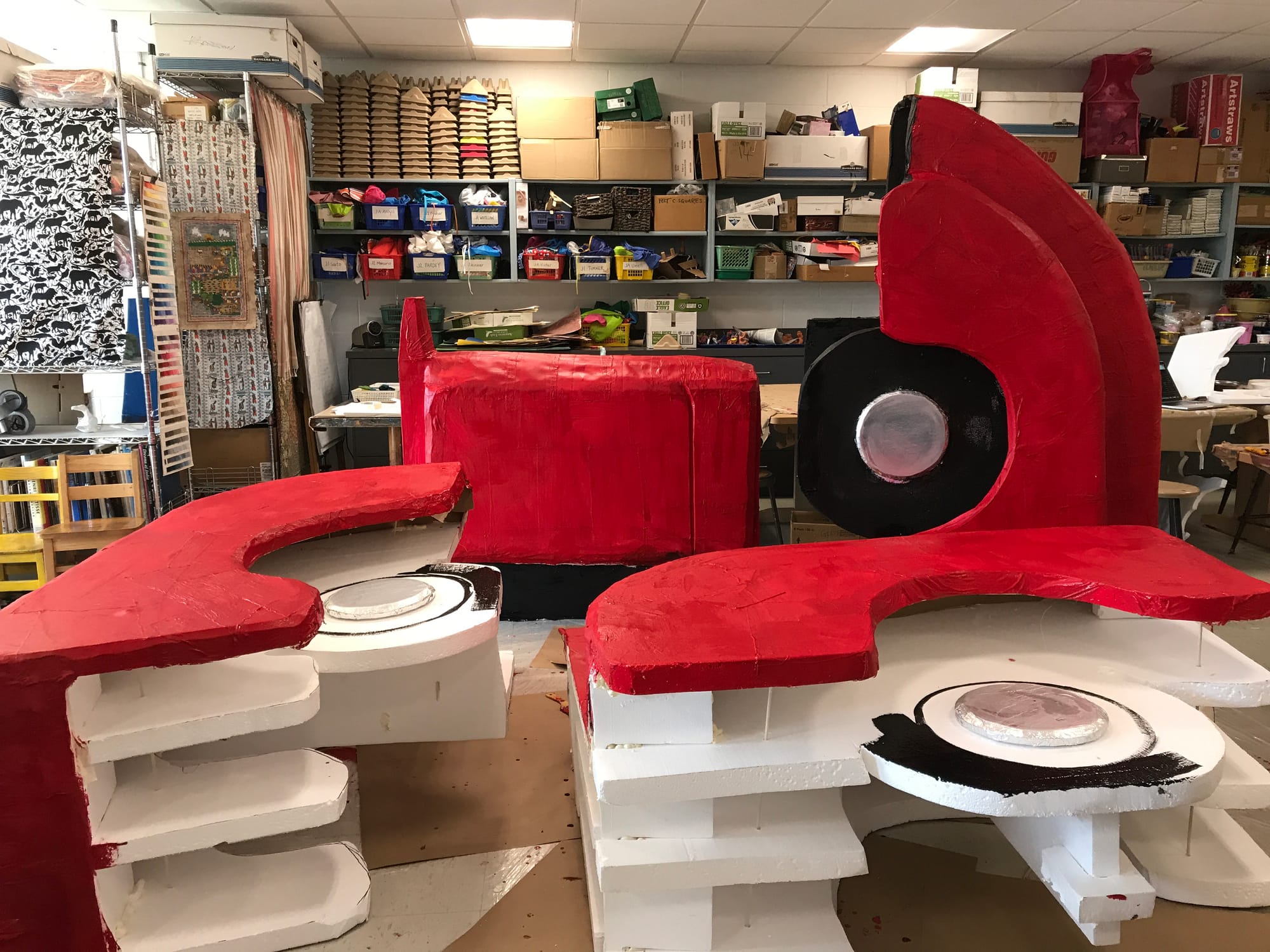
It was a humbling experience, especially considering the months I’d spent planning everything so I could build the car in just one week. I thought to myself, ‘A professional would never let this happen’.
Many years before this incident, I began my artistic training as a drawing student at an independent art school in Lisbon called Ar.Co (Centro de Arte e Comunicação Visual). I was fortunate to learn from extraordinary teachers in a practice-based teaching environment where, on the one hand, resources were scarce, but on the other, bureaucracy was also minimal. Eventually, I became a printmaker.

I completed my studies at Camberwell College in London, on the advice of my printmaking teacher, Bartolomeu Cid dos Santos. At the time, I worked primarily with copper, often on a large scale. Each piece required extensive planning. Copper is an unforgiving semi-precious metal — a mistake on an etching is permanent. It either ruins the work or adds something new to it.
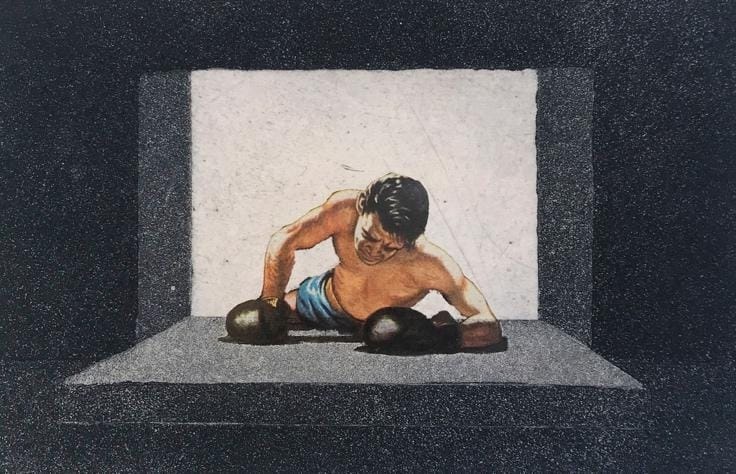
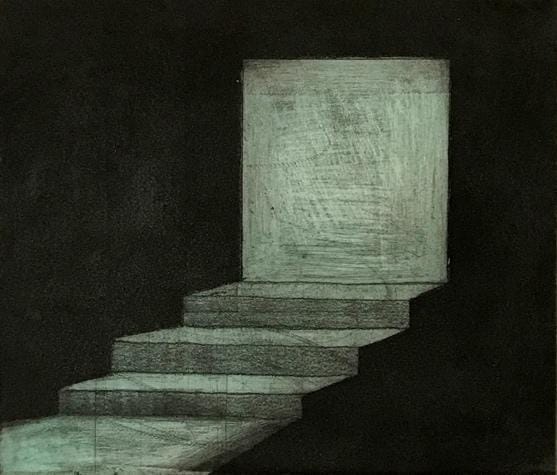
Figure 3: Aquatint and chine-collé on copper, 2017
Figure 4: Etching and aquatint on copper, 2018
When I became an international school teacher, I expanded into new media — photography, sculpture, ceramics, painting, video editing — to meet the demands of a middle and high school curriculum. I was excited to explore all these new processes. Still, I held on to my identity as a printmaker. I kept a strict divide between my life as an artist and my life as a teacher. In fact, I paused my own creative work for several years to focus solely on teaching.
My first school theatre project was His Dark Materials, based on Philip Pullman’s trilogy. The director invited me to create ‘daemons’ — animals that talk, glow mysteriously, and range in size from insects to bears. I wasn’t chosen because of my prior experience; I was simply one of the art teachers who was available. To create these puppets I used polypropylene sheets because of the material’s inherent qualities, especially when lit in a certain way — polypropylene can be transparent, metallic, and iridescent. It is hard to glue so I used staples and basic origamic techniques. Later I used the same method to create hundreds of animal props for The Lion King.
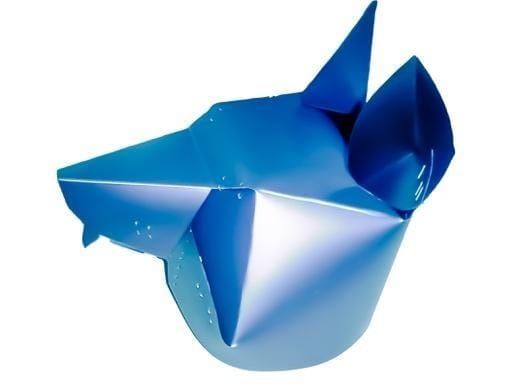
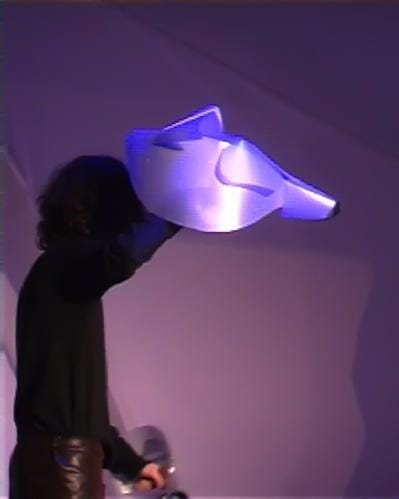
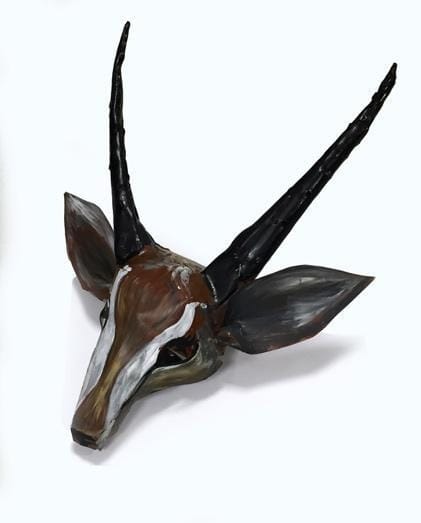
Figure 5: Wolf daemon for His Dark Materials, St. Julian’s School, Lisbon, 2006
Figure 6: Polar bear armour helmet for His Dark Materials, St. Julian’s School, Lisbon, 2006
Figure 7: Gazelle for The Lion King, UNIS, New York, 2015
Theatre soon became the most exciting and demanding part of my artistic life. Designing sets, props, and costumes is difficult. It requires translating someone else’s story, script, and vision into a physical space. And when you’re the one who is also building the set, limitations of scale, strength, and budget quickly shape your design choices. These material constraints became the foundation of more creative and compelling work.
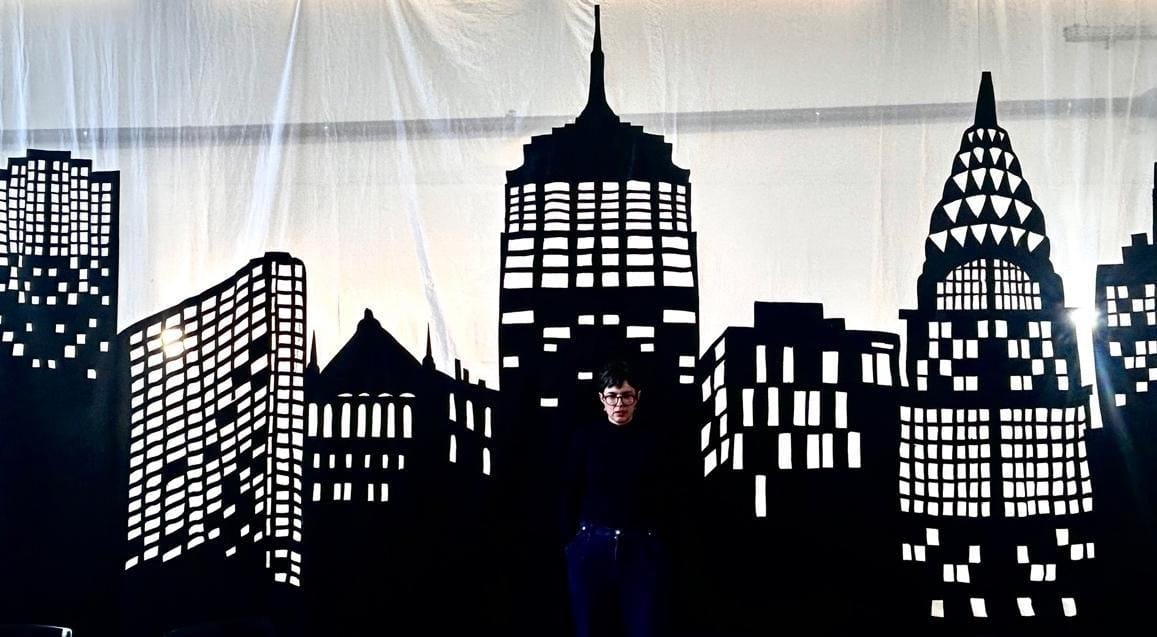
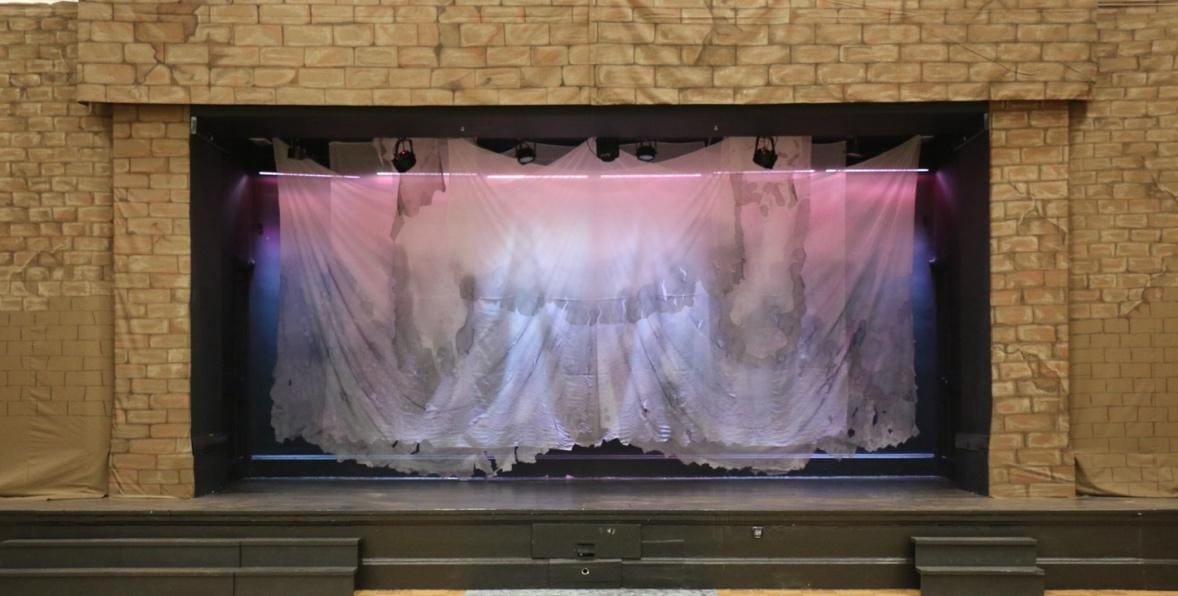
Figure 8: Backdrop for Annie, felt cutouts on muslin, St. Julian’s School, Lisbon, 2025
Figure 9: Backdrop for Oliver, stained and ripped fabric, charcoal, and chalk, St. Julian’s School, Lisbon, 2015
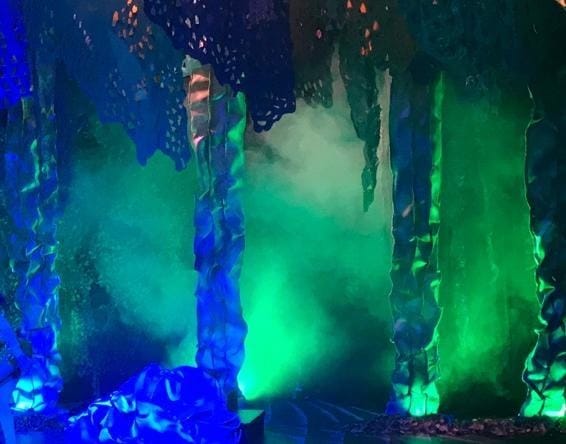
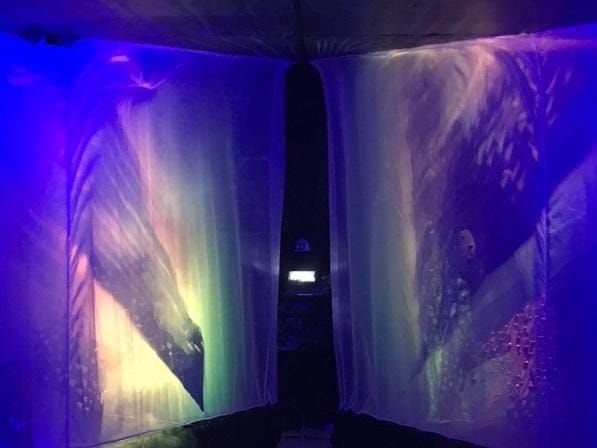
Figure 10: Set for A Midsummer Night's Dream, fabric and wire, St. Julian’s School, Lisbon, 2019
Figure 11: Lighting test on muslin curtain for A Midsummer Night’s Dream, St. Julian’s School, Lisbon, 2019
The collaborative and interdisciplinary world of school theatre has not only shaped my work, it has gradually and profoundly transformed the way I see it. Teaching, drawing, printing, working on designs and installations, collaborating with other artists, are all part of the same practice, which defies categorisation. I no longer maintain an internal distinction between being an artist and being a teacher.
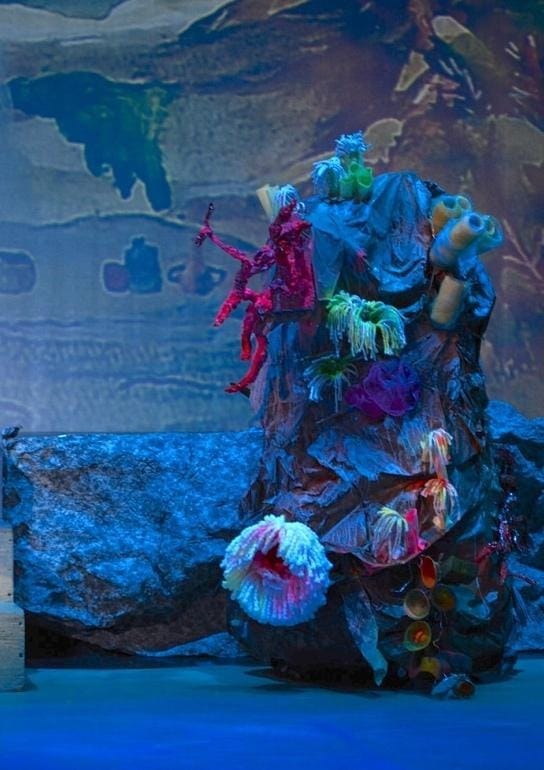
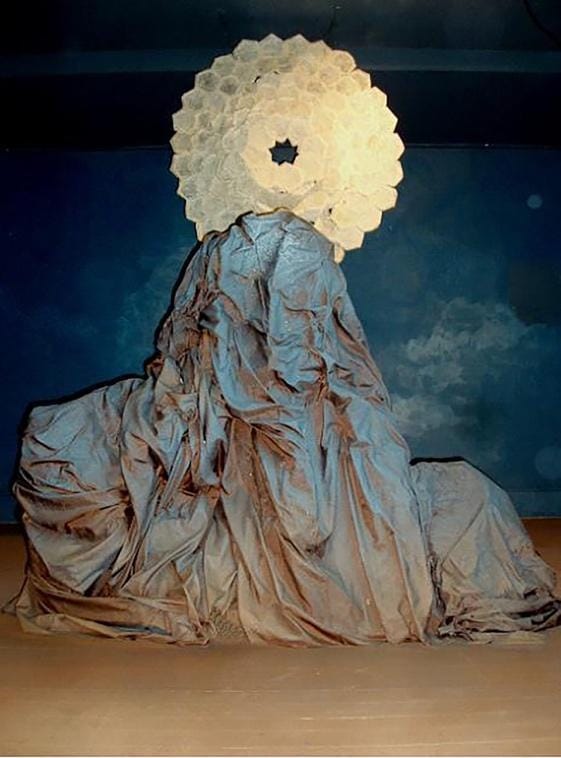
Figure 12: Coral reef for The Little Mermaid, paper, glue, mops, toilet brushes, and paint rolls, UNIS, New York, 2019
Figure 13: Set for Hiawatha, fabric, glue, and chickenwire, St. Julian’s School, Lisbon, 2007
I have used the experience of building sets as a starting point to teach drawing, printmaking, illustration, mixed media and book arts. I have also incorporated work for the stage into printmaking — in a literal sense — by inking props such as masks or costumes and squashing them through an intaglio press to make a print.
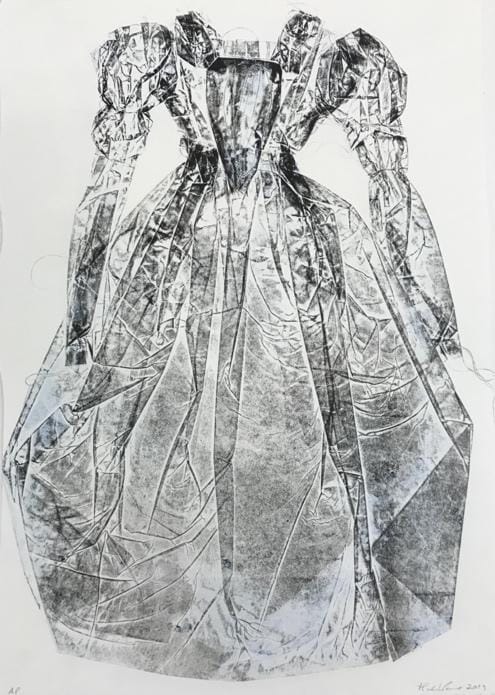
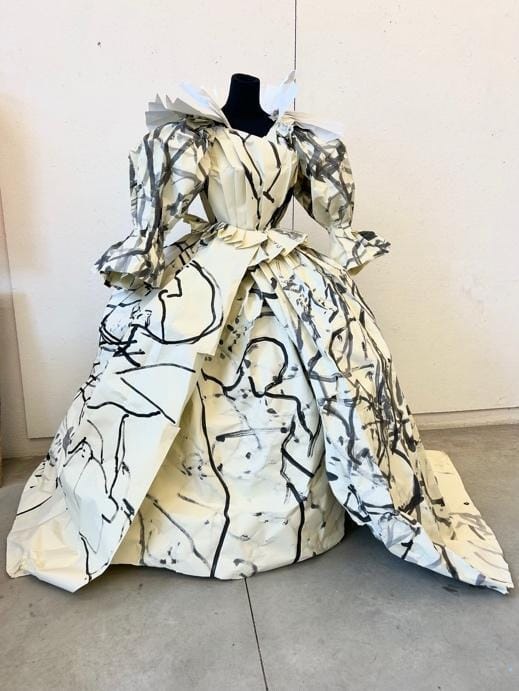
Figure 14: Collograph made from a small paper dress, 2016
Figure 15: Paper dress for life-drawing class, 2023
During the pandemic the enforced lockdown left me in a very difficult situation, with no access to the studio, the press or any of the printing equipment. I was back at Ar.Co teaching printmaking and it was impossible to do so online. This serious restriction forced all of us artists/teachers to reinvent ourselves in order to still have something to offer our students. Building model sets in reusable plastic food containers was one of the memorable projects of that time and led to further explorations with origami folds applied to printmaking and collage.
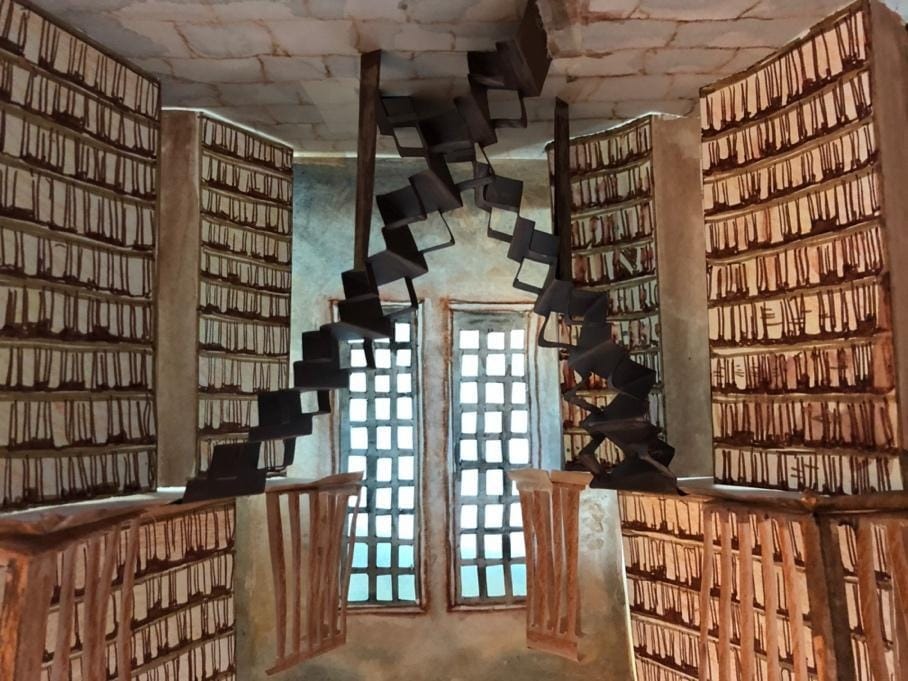
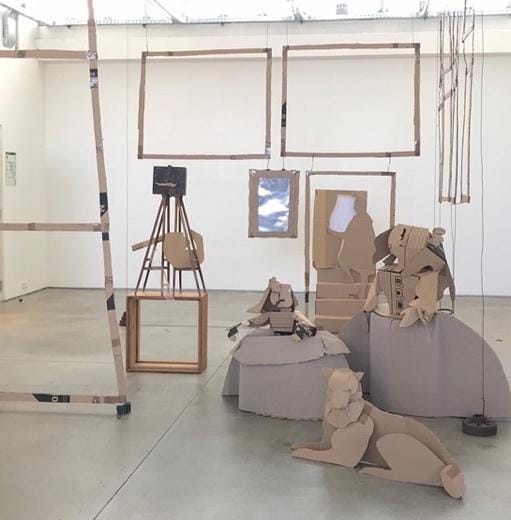
Figure 16: Model of a library inside a reusable plastic food container, lit by a mobile phone light, 2021
Figure 17: Installation based on Velazquez’s Las Meninas, model for a drawing and painting workshop designed in collaboration with António Marques, cardboard, tape, and wire, Ar.Co, Lisbon, 2018
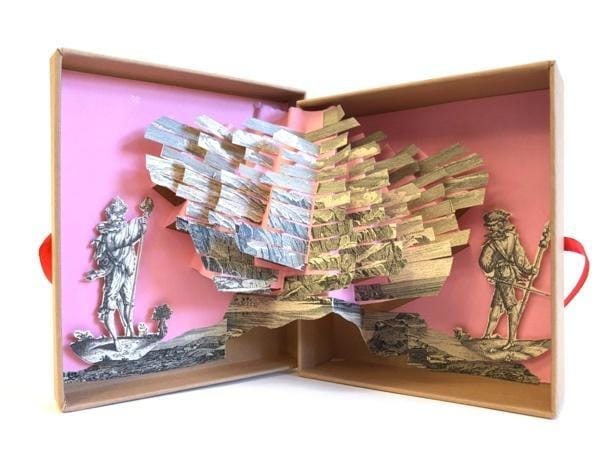
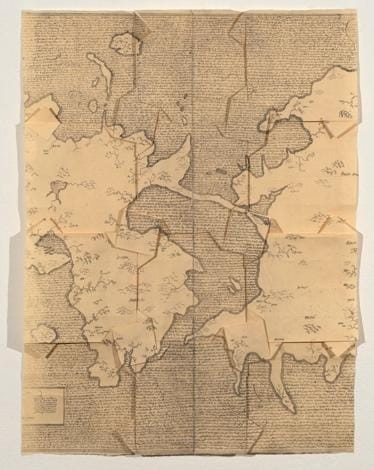
Figure 18: Pop-up collage, 2022
Figure 19: Map, etching printed on origami tessellation folded paper, project SPAM with Constança Arouca, 2021
More recently I began a new collective in ceramics — The Hunchback Society — with artist Jorge Nesbitt. We produce works influenced by narrative and storytelling. We are particularly interested in humour or contradiction. Theatre and film are a great source of inspiration for this work.
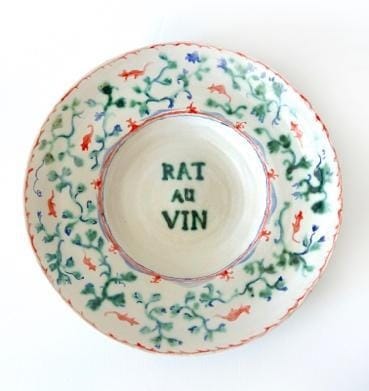
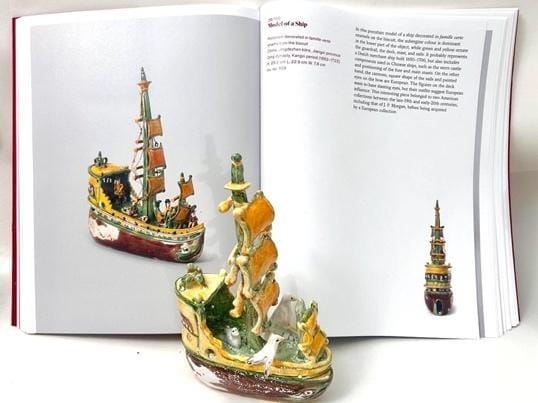
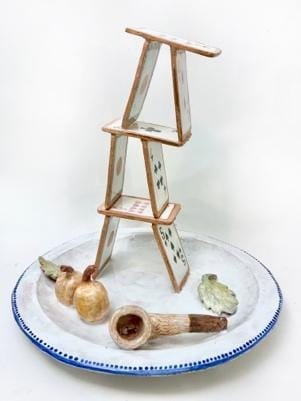
Figure 20: Rat au Vin, inspired by Blackadder's Rat au Van, glazed stoneware, The Hunchback Society, 2023
Figure 21: Model of a model of a ship (based on a 17th-century Chinese porcelain from the Kangxi period, Albuquerque Foundation collection, Linhó, Portugal), glazed stoneware, The Hunchback Society, 2025
Figure 22: Still-life plate with cards, glazed stoneware, The Hunchback Society, 2025
Each new project arises from a desire to make something impossible happen. It can be a community experience, such as a school play or a collective exhibition. Solutions such as folding polypropylene into creatures, transforming mops and toilet brushes into coral reefs, and studying lighting effects with reusable plastic food containers are the result of a game between intention and improvisation.
Just like what happened in Grease, back in 2019. The four-part Ford convertible was eventually carried onstage by the actors, its assembly cleverly folded into the musical number with unexpected comedic effect. What began as a design flaw turned into a purposeful scene — made possible by everyone’s willingness to adapt and reimagine. It’s this spirit of collective problem-solving and reinvention that inspires me most when working in theatre.


